THE WINDS INFLUENCE ON CONDITIONS
WIND STRENGTH
The wind direction also plays a huge role in the conditions, we’ll cover this after looking at the winds strength.
0-10kmph / 0-6mph / 0-5.4 knots : potentially ideal conditions, very little wind and quite rare (depending on where you’re swimming).
10-20kmph / 6-12.5mph / 5.4-11 knots : potentially very good conditions. Less rare.
20-30kmph / 12.5-18.5mph / 11-16 knots : starts to really see choppy conditions and far less favourable swimming.
30kmph+ Choppy! Best staying out of the water or finding an alternative area with shelter…a quarry, river…you could look for an area with cliffs, provided the wind is coming off the land and flying over your head and out to sea.
WIND DIRECTION
OFF-SHORE :
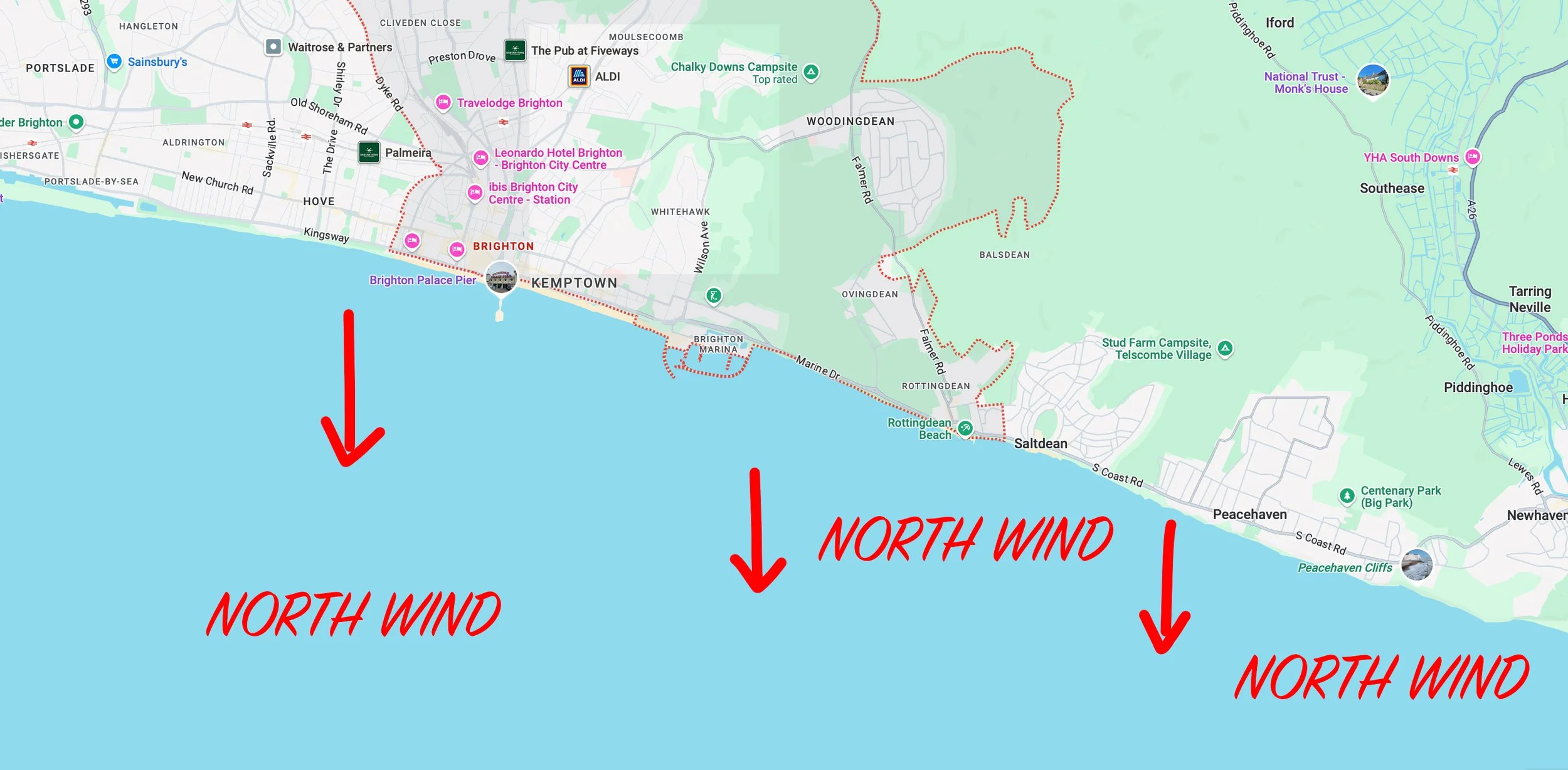
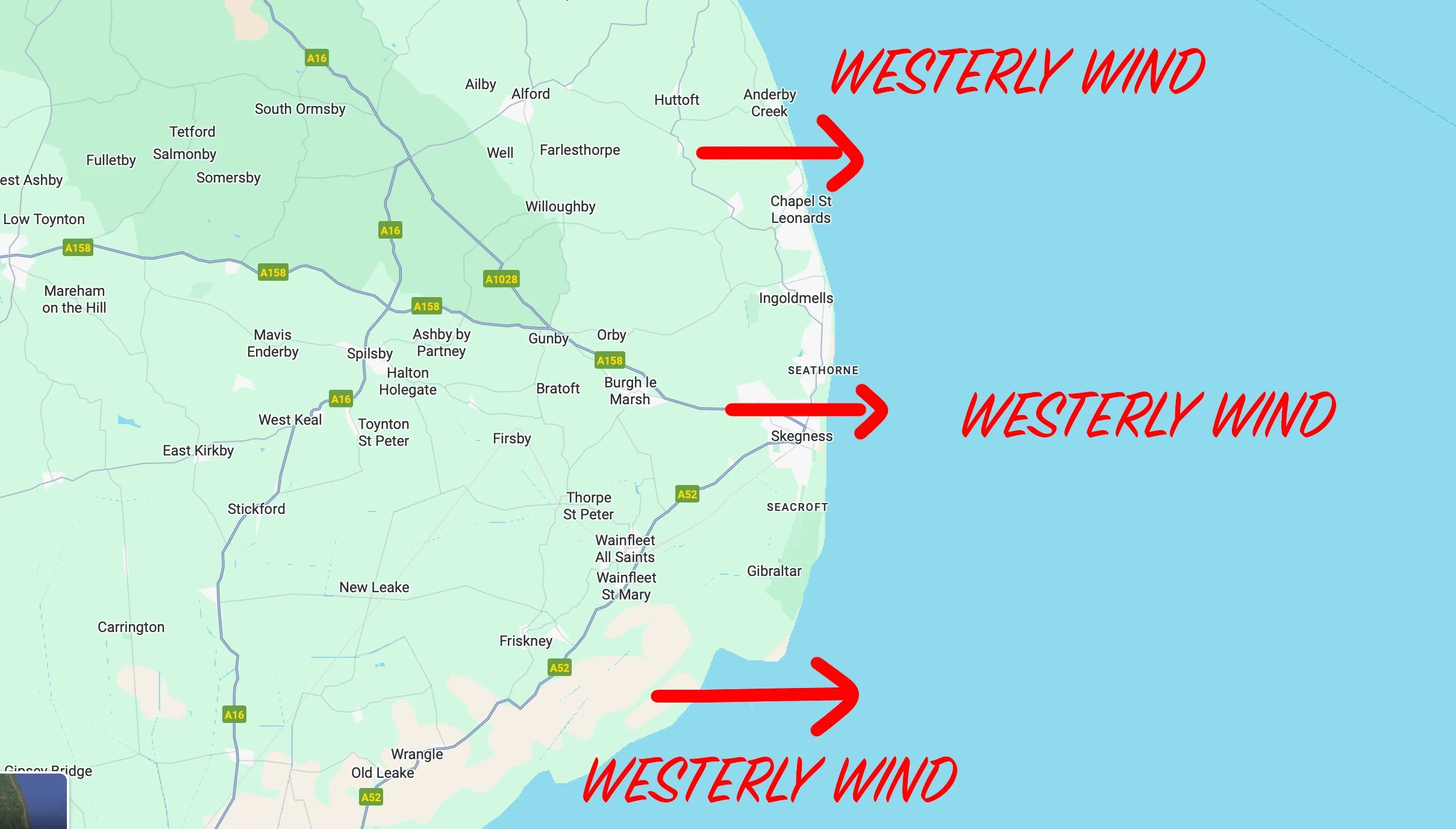
People often think an off-shore wind will push you further away from the shore and be problematic. This is true for very strong wind but let’s think about surface area. If you swim front crawl or breaststroke, you have very small surface area exposed to the wind, with the majority of your body underwater. In general terms, this means that the wind has very little power to push your body around in the water. Certainly a wind strength of 20kmph or under wouldn’t. With an off-shore wind, the wind hits the waster where you’d be entering the water, so there’s little to no chance of the wind influencing the conditions close to shore. Obviously if you go out a few miles it’ll be choppy but most of you aren’t swimming 2-3 miles off-shore!
I’ll state the obvious, an off-shore wind direction depends on where you are in the world. In the examples below, an off-shore wind for Brighton is a northerly wind and for Skegness, is a westerly wind.
CROSS-SHORE WIND :
ie. blowing parallel to the shape of the coastline. This wind direction continues to be fine for lighter winds. Should the wind be moderate-to-strong, you can still swim but you’d be looking to cover a route from position A to position B, rather than a circular route. You’d aim to have a tail-wind before exiting the water and walking back or having a car waiting at the finish etc. You can turn around and swim back, just remember that you’ll be swimming against the wind and possible chop.
ON-SHORE WIND :
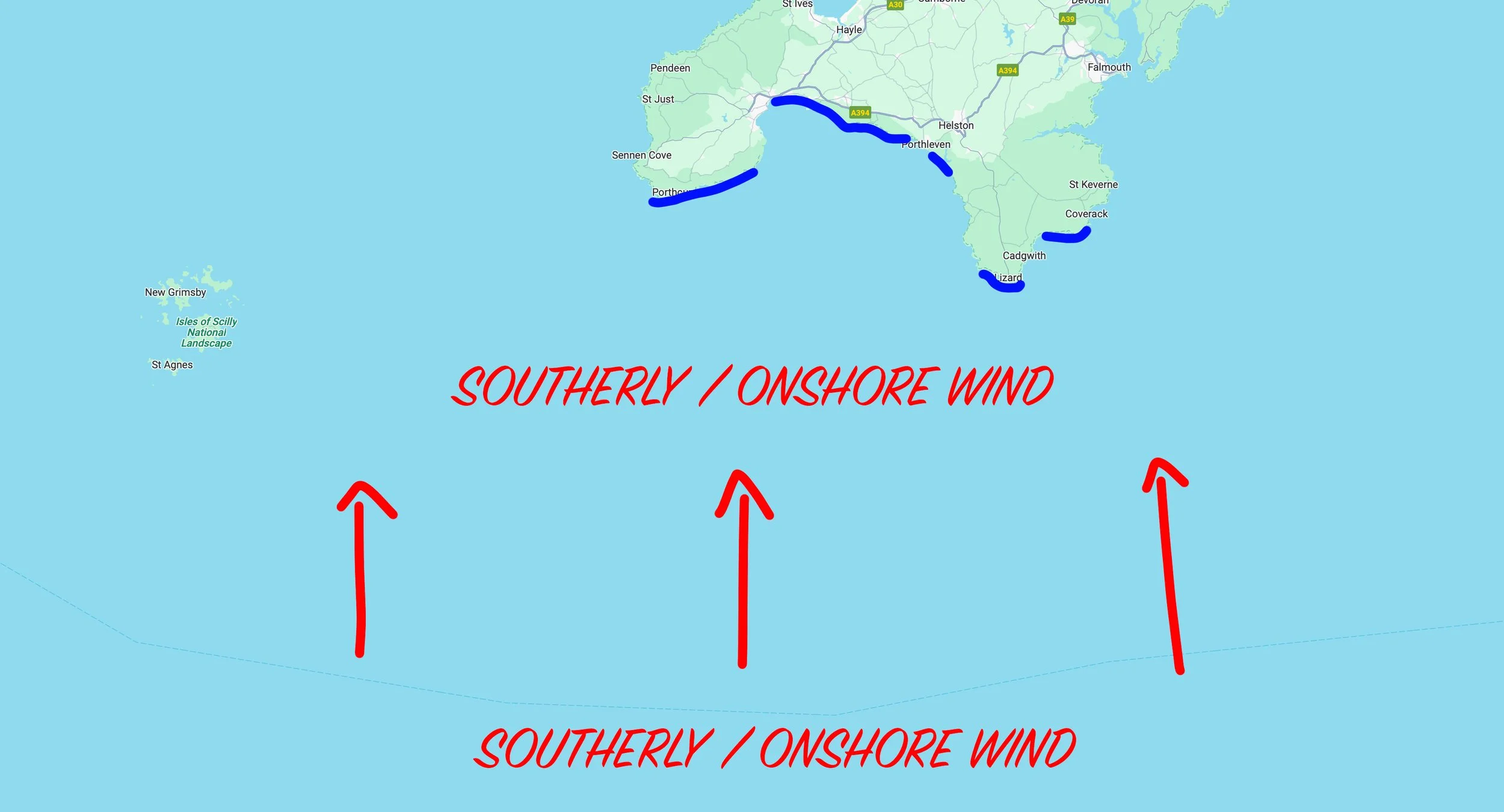
ie. wind blowing into a bay/area where you’re swimming. In the example below, we have a southerly wind blowing into the west Cornwall / Lizard Peninsula areas, with the areas in blue (south facing), showing where this onshore wind and chop will affect the most. As you can see in the diagram, you have miles and miles of uninterrupted, open sea, so wind from this direction has far more influence on the local conditions. If you had a perfectly straight southerly wind, there’s approx 380 miles of uninterrupted sea to northern Spain, that a southerly wind can influence.
EXCEPTIONS TO THE RULES :
All of the above is good in theory but there are some exceptions to the rules.
Firstly, (and from first hand experience!)…land mass, large cliffs, the shape and height of the land, can all influence the wind and wind direction. Particularly true with strong wind. Wind can and will follow the shape of the land, curve around with cliffs, hit areas of cliff and turn back on itself…
The forecast can be wrong! …and regularly is. The direction and strength of the wind doesn’t have to be out by much to completely change the expected conditions. Check the forecast online by all means, but always then re-check when you arrive at your intended swim. Ensure the forecasters have got it right and the conditions are following the forecast.
Early and late forecasted conditions : the forecast can be accurate but a few hours/half a day/maybe a day early or late.
The previous days conditions can influence the current conditions. Whilst the wind direction and strength may change as predicted, you may still have chop coming in from the previous days conditions. This can definitely be true if the previous days conditions include really strong wind, or a long period of wind from a particular direction. Always check the longer terms forecast, look a day either side and take notice of any sudden and dramatic changes that have been forecast, as these might take place earlier or later than predicted.