WAVES & HOW THEY BREAK
This is an important element of beach water safety to understand, as it goes a long way to explaining how rip currents work. As rip current typically carves out a deeper channel, waves don’t tend to break in or over the rip and this makes them easier to identify. So rip currents can last anywhere from a few minutes (although this is quite rare) to years and some, around permanent rock features, can last for decades. As the current continuously pulls out, it takes sand from the surface of the sand bank with it and starts to carve out a deep/er channel. As incoming waves don’t experience the same friction with the sand bank, as they would over a shallower sand bank, the waves down pitch up and break. They stay in more of a ‘swell’ form (or a surging wave).
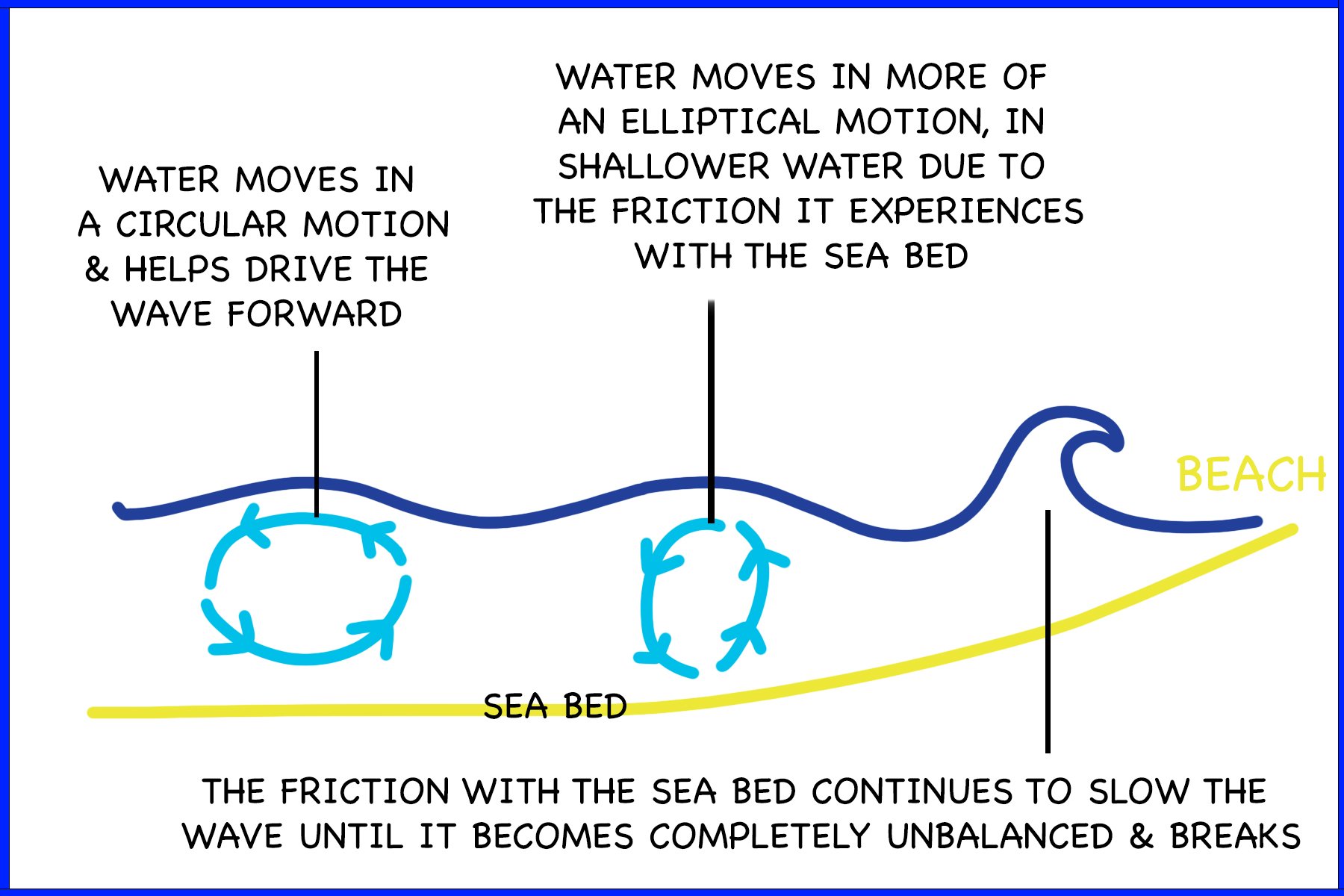
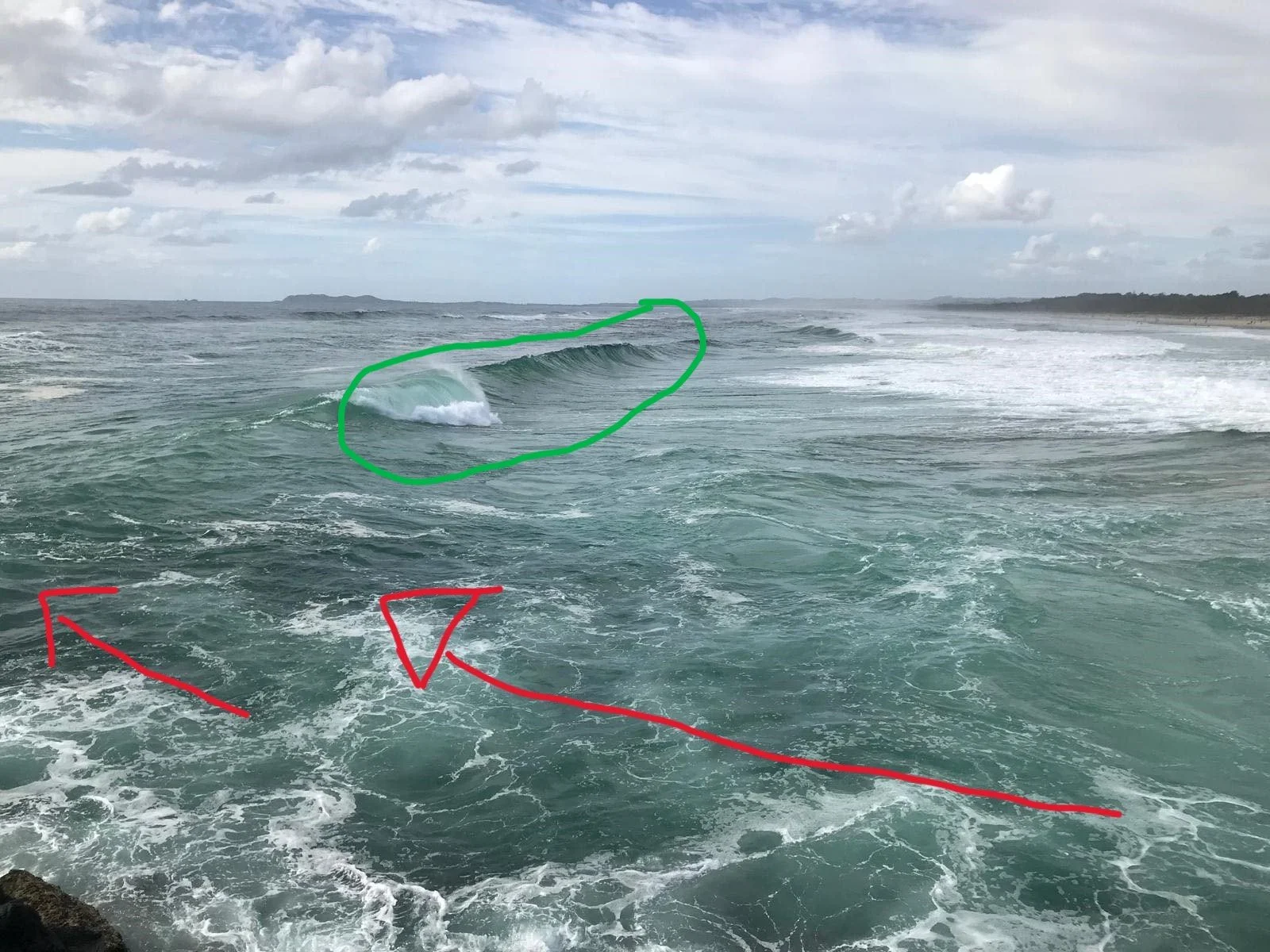
Below, you’ll find a diagram of the formation of a wave. You also have a photo of a section of beach. In the photo, you can clearly see a number of sand banks, where waves are breaking over the shallower sand banks. In the foreground, you can see a deeper section where waves are not breaking. This rip current is found right next to the headland. This is quite a common theme, as flat, hard rock offers up less resistance and friction than sand…so it’s far easy for the water to flow out.