AUSTRALIAN RIP CURRENT
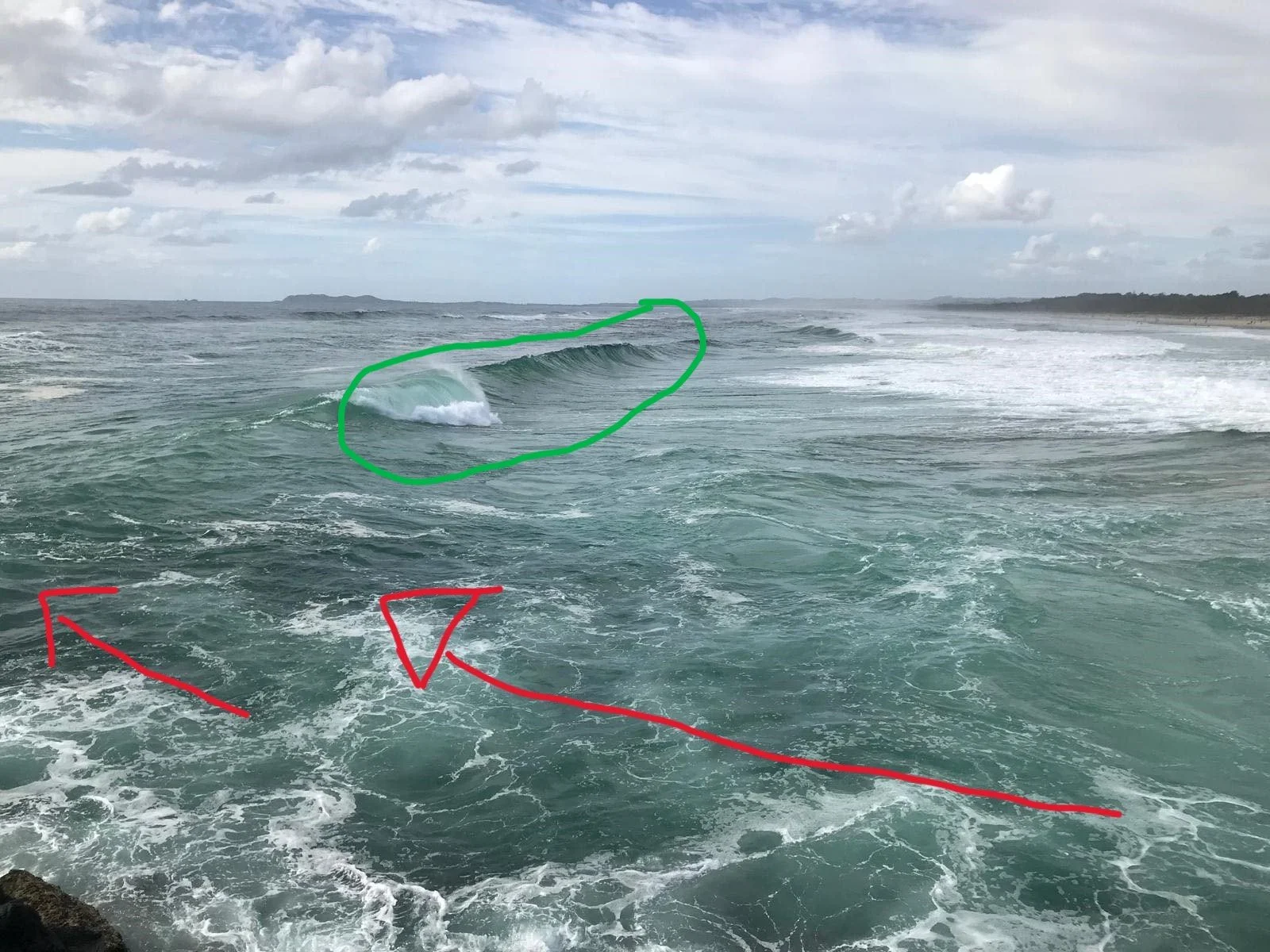
These sneaky rip currents get everywhere! Here’s a text book example of a rip current, taken by Matthew whist he was in Australia.
Along the red arrows, you’ll notice a very flat, calmer looking area, running alongside the rocks and headland. This is because the water getting dragged out, is dredging sand off the bottom and creating a deep channel. Waves break because of the friction they experience with the sand bank, that slows them down. Due to the deeper channel, the swell in this area doesn’t experience the same friction and therefore, doesn’t break. The green circled area shows waves breaking on the sand bank. Although there is surf, this is the area that is free from rip currents and the safer spot.
If you found yourself being dragged out in this rip you :
wouldn’t swim against the rip
wouldn’t try and climb onto the headland
would let the rip take you out and then swim across to the green zone
alternatively, swim to the green zone straight away (swimming parallel to the beach)
would let the rip take you out, stay put and wave for assistance and wait for help. This was/is a lifeguarded beach.
With conditions like these, if you weren’t a fairly strong, experienced swimmer, this might be a day to avoid or find an alternative venue.