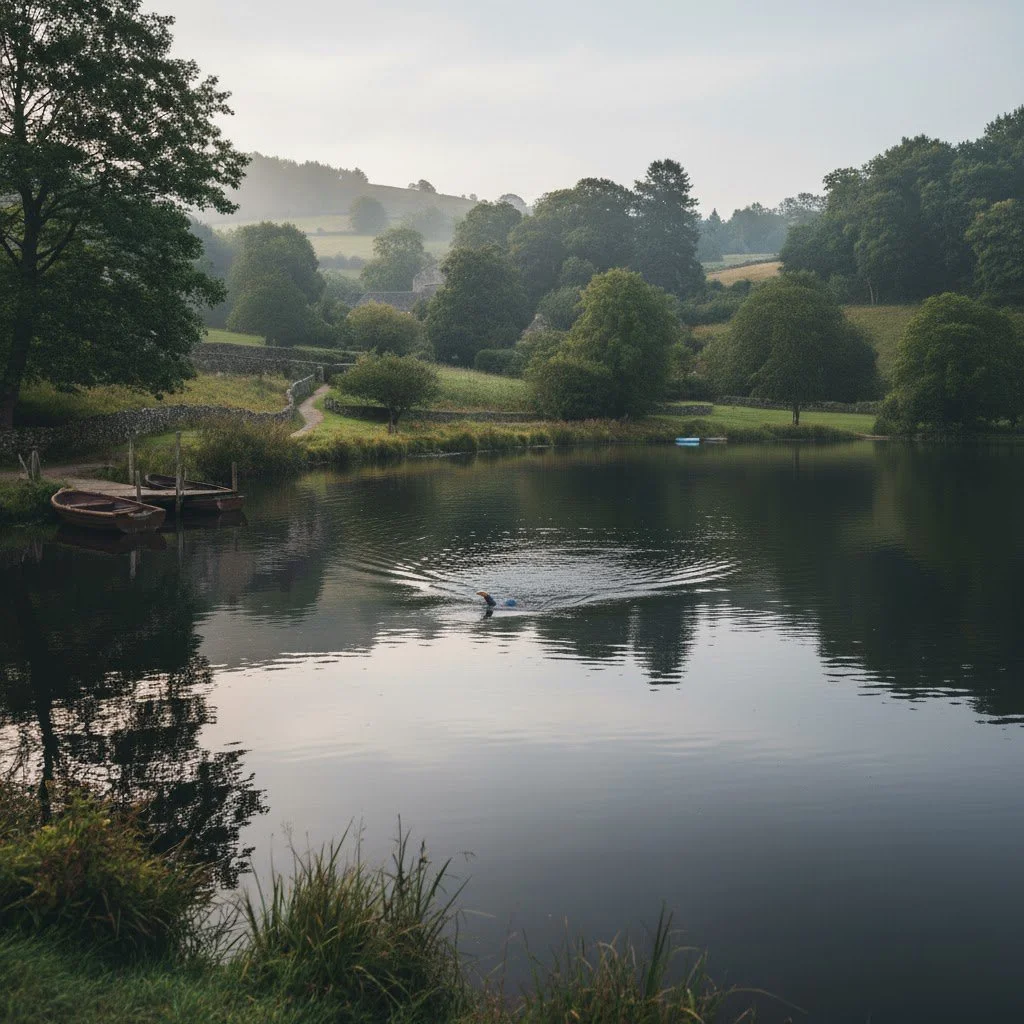
LAKE SWIMMING
Lakes experience many of the same environmental factors as the sea. Some of the larger lakes even experience tides but on a much smaller scale!
In terms of swimming, the key factors would be:
the wind
temperature
submerged objects
water quality
biological hazards
entry and exit
We’ll also cover reservoir swimming at the bottom of the page.
THE WIND
Much like the sea, a lake can experience ‘chop’. Whilst lakes can and generally are more protected, wind can still funnel down through valleys, follow the shape of the land and create a decent size chop in the water. Again, checking the forecast pre-swim is always a good idea. Some knowledge of the lake, surrounding land, tree cover etc is also handy.
MORE INFORMATION REGARDING READING FORECASTS - CLICK HERE
TEMP.
Lakes (depending on the size and depth), are far more prone to temperature fluctuations than the sea. It’s a smaller mass of water, so can increase or drop temperature fairly easily. Lakes typically get hotter in the summer and colder in the winter than the sea. Whilst both warmer and colder temperatures may sound appealing, there can be issues associated with both.
WARM TEMPERATURES :
Warmer water can have minimal negative impacts on a swimmer, other than possible overheating, if you wear a wetsuit.
Whilst warmer water temperatures sound like a dream, it can become quite the opposite. Warmer waters can result in blue-green algae growth (cyanobacteria)…particularly in areas with minimal water movement. Direct contact with algae can result in skin irritation and rashes, eye, throat or respiratory irritation…it can also lead to illness, including vomiting, nausea and diarrhea. *Direct contact to algae can also be dangerous for pets.
COLDER TEMPERATURES :
This is covered in the cold water section.
ENTRY/EXIT & SUBMERGED OBJECTS
Pretty straight forward - thoroughly check the entry and exit route in the lake. Ensure there are no sudden drop-offs and that you’re physically capable to comfortably exit the water. Also be mindful of a muddy and rocky entry and slip hazard.
Water depth can vary suddenly, so never jump or dive into the lake unless you’ve thoroughly researched the area.
Even if you know an area well, be cautious of submerged objects in the water. This could include human activity and also felled tree and vegetation. Swimming face-first into a tree branch could definitely do some damage!
WATER QUALITY
Lakes and rivers tend to have poorer water quality monitoring systems than the sea and often tend to be in a worse state… certainly in the UK anyway. A major source of poor water quality in lakes (and rivers…which often run into lakes), are water companies and untreated sewerage discharge and farm run-off (from fertilisers and animal waste). This is particularly problematic after heavy rain or periods of consistent rainfall.
You can check the following link for an update idea of the river quality near you - CLICK HERE
*Algae blooms are covered in the ‘temperature’ section above.
WILDLIFE
It should go without saying to leave animals like swans, ducks, nesting birds etc well alone.
Here, we’ll mention ‘Swimmers itch’ or Cercarial Dermatitis. Direct contact with small snailes can result in ‘swimmer’s itch’ / Cercarial Dermatitis. An itchy sensation that can last for up to a couple of days and is more common around marshy lakes and stagnant ponds.
Weil’s Disease is also worth some consideration. Typically a problem in built up, urban areas, so urban rivers, canals…varied by rats urine in the water, which can pass on Leptospirosis through open wounds, eyes, nose and/or throat. Normally starts to take affect 3-14 days after swimming.
RESERVOIR SWIMMING
Lakes and reservoirs may appear fairly similar in appearance but can differ significantly in their origin and purpose.
A lake is generally a large body of water that supports a range of aquatic plants and animals, contributing to the local environment and biodiversity.
A reservoir, by contrast, is almost always man-made. Reservoirs are constructed to store substantial volumes of water for a variety of essential functions, including public water supply, flood management and in some cases, hydroelectric power generation.
While reservoirs may look inviting, they can be extremely dangerous and unsuitable for swimming or recreational use. Government guidance strongly advises the public avoid entering reservoir waters for the following reasons:
Hidden hazards: unpredictable depth and may contain underwater infrastructure or machinery that poses serious risks of injury.
Strong currents: Pumps and water movement systems can create powerful, unseen currents beneath the surface.
Difficult access : unsafe and problematic access.
Remote locations: Many reservoirs are situated in isolated areas, making it difficult for emergency services to respond quickly and reducing the chances of members of the public alerting the authorities.
Tragically, there have been several serious incidents and fatalities at reservoirs across the UK in recent years.
EXCEPTIONS :
Some water activity businesses do operate on reservoirs. These can include swimming. Worth looking up, if you’re keen on some reservoir swimming.